
August 8, 2026
The Best Time to Visit Miami
High season, the two shoulder months nobody books, hurricane season in plain terms, and the event weeks that fill the whole city.
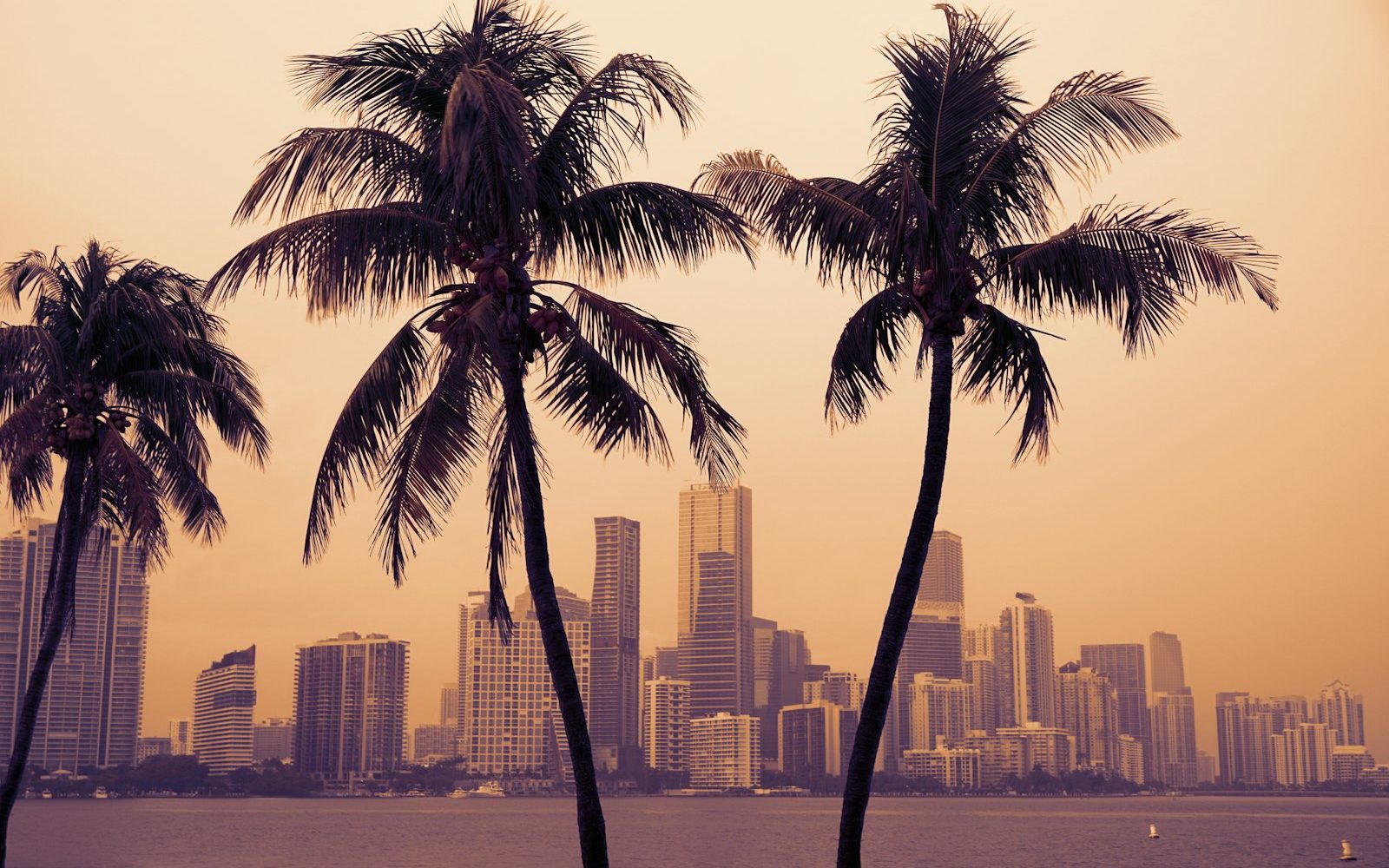
Miami does not really have an off season — it has a season where the weather is reliably perfect and everything is full, and a season where the weather is a gamble and the same house costs a fraction as much. Knowing which one you are booking into matters more here than in most destinations, because the swing is unusually large at both ends.
December to April: the high season
This is the Miami people picture. Daytime temperatures in the mid-twenties Celsius, low humidity, almost no rain, and the reason the city fills with people escaping northern winters.
It is also when everything is most expensive and most booked. Waterfront houses for New Year are typically committed months ahead; the best of them, longer. If your dates are fixed in this window, the practical advice is simply to decide early — the inventory does not improve as you get closer.
May and November: the two good weeks nobody books
The shoulder months are the value in Miami. The weather in November is usually excellent and the winter crowd has not arrived. May is warm and humid but still largely dry, and prices have dropped from the winter peak.
If your dates are flexible and you want the same house for meaningfully less, these are the two months to look at first.
June to November: hurricane season
The Atlantic hurricane season officially runs from 1 June to 30 November, with activity concentrated in the later part of that window — August through October is the statistically active core.
What this means in practice is less dramatic than it sounds. Most days in these months are hot, humid and fine, with a short heavy afternoon shower. Direct storm impacts on Miami in any given week are unlikely. But the risk is not zero, and it is the one thing about a Florida booking worth reading the paperwork on.
Two practical points:
- Check the cancellation terms specifically for named storms. Standard flexible cancellation and hurricane-specific clauses are not the same thing, and they behave differently when a storm is forecast but has not yet arrived.
- Consider travel insurance that covers weather disruption rather than assuming the property or the airline will absorb it.
Prices in these months are genuinely low, and for a flexible traveller that trade is often worth making with eyes open.
The dates that override everything
Several events fill the city regardless of season, and they change availability and pricing for the whole region — not just near the venue. If your trip overlaps one of these by accident, you will pay for it. If you are coming for one, book far earlier than feels necessary.
- Art Basel Miami Beach — early December. The single busiest week of the year on the beach; hotels, houses and restaurants all go at once.
- Miami International Boat Show — February, around the Presidents' Day weekend. Fills the waterfront and the marinas.
- Formula 1 Miami Grand Prix — May, at the Miami International Autodrome around Hard Rock Stadium in Miami Gardens. Note that this is well north of the beach: the traffic pattern is completely different from a downtown event.
- Spring break — March. Concentrated on South Beach, and the reason a number of visitors avoid that specific neighbourhood in that specific month.
Exact dates move year to year. Confirm them before you commit to anything non-refundable.
What the weather actually does
Two things surprise European visitors. The first is that Miami is humid for much of the year in a way that a temperature reading does not convey — 30°C in August feels very different from 30°C in the Mediterranean. The second is that summer rain arrives as a heavy, short afternoon storm rather than a grey day: it is genuinely possible to plan around.
Sea temperature stays swimmable year-round. Even in January the Atlantic here is warmer than the Mediterranean is in June.
So when should you come?
- Best weather, highest price — January to March.
- Best balance — November, or late April into May.
- Best value, accepted risk — September and October, with the cancellation terms read properly.
- Avoid unless you are attending — Art Basel week and the F1 weekend, if you want a quiet stay.
Planning around it
Send us a rough window rather than fixed dates and we will tell you which weeks in it are worth booking and which ones you are paying a premium for.
If you already know your dates, start with the villas and the fleet, and tell us what you are trying to do with the week.
Planning a stay in Miami?
Tell us your dates